
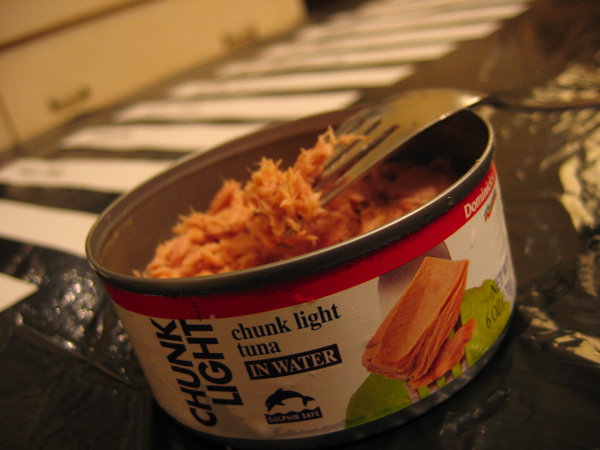
Hey y’all! This week we’re going to dive in (pun intended) to some interesting information surrounding methylmercury consumption, seeing what it is, how it can affect us, and some common sources. First off, methylmercury is the main form of mercury we consume through seafood. Additionally, watch out! It’s toxic! Specifically, methylmercury is a neurotoxin that can cause serious complications especially for vulnerable populations like infants and children. According to the EPA, fish and shellfish are the main reasons for methylmercury to be circulating in our body.
But how in the world is mercury getting into seafood?! That’s exactly what I was wondering, and through a little digging I learned that mercury enters water sources through pollution and runoff. Consequently, this mercury is absorbed by organisms like plankton which are then eaten by fish which are eaten by bigger fish, like our main culprit: tuna. Since there are no good ways for them to excrete methylmercury, and they tend to eat a lot, they get a lot of buildup in them. What’s even crazier is that different types of tuna have different buildup. Research done in Raleigh showed that albacore tuna had the highest concentration while light tuna and yellowfin tuna had lower concentrations. The main reason for this difference is because albacore are much larger and live longer so they eat more fish and have more tissue to accumulate mercury… crazy!
Signs and Symptoms
Like I said earlier, mercury = not good for you. But what exactly does that mean practically? How do you know if you might have increased levels of methylmercury in your body. Well, according to the EPA, there are a few telltale signs that let you know you made need to go see your doctor. The neurotoxic effects of methylmercury include lack of coordination, impaired speech, pins and needles feelings, and more, yikes! Most people do NOT have high enough levels to be concerned, but if you fear that you may have eaten a little too much tuna regularly, or maybe are exposed in other ways, definitely get checked out if you experience these.
While it’s great to know what to look out for, it is hard to know at what point you should be concerned about methylmercury consumption. Exactly how much tuna is too much tuna? While this varies for different populations, I can give you a quick rundown. According to the FDA, a serving of tuna is 4 oz. before cooking. While the FDA does recommend that adults, pregnant women, and children eat 2-3 servings of fish per week, it also highly recommends that pregnant women and children eat within the “Best Choices” category of fish which does not include any variety of tuna. For college students, tuna is alright, but the FDA recommends sticking to light tuna to avoid overconsumption of methylmercury. Additionally, it is recommended that if a serving of albacore tuna is consumed, no other fish should be eaten that week to keep methylmercury levels in check.
Thimerosal
While we’re on the topic of mercury, it is important to take a look at thimerosal. Thimerosal is an organomercury that gets used in vaccines to help with preservation. You might be thinking, wait a minute… mercury… in vaccines?! So vaccines are toxic? In short, no. But let me show you why. In the body, thimerosal is broken down into ethylmercury not methylmercury. Studies have demonstrated that this ethylmercury can be excreted from the body in a week or less, while methylmercury sticks with us for way longer. This University of Rochester study, tested mercury levels in infants after receiving vaccines and showed that there was no increase above safe levels and the mercury did not linger.
If that’s not convincing enough for you, take a look at some other studies, there are plenty out there! For example, this Danish study showed that even after removing thimerosal from vaccines there was still an increase in autism incidences over the decades. The data analysis demonstrated that there is no correlation between autism and thimerosal concentrations in vaccines. Most likely, there is an incorrect relationship being drawn by culture because as our diagnosis tools improve, the ability to correctly diagnose autism increases. But it has nothing to do with vaccines and thimerosal as far as we can tell!
A Personal Note 🙂
Personally, I pretty much only eat tuna when I go out for sushi, which is probably only about 2 times per month. And sometimes, I don’t even eat sushi with tuna, opting for a roll that has shrimp or whitefish. So I think that I should consider my mercury levels to be pretty safe. If anything, this dive into learning more about mercury has shown me that fish, while good, has some concerns to consider. Methylmercury is by far more dangerous than ethylmercury, due to it staying in the body longer and accumulating. So go eat fish for all the benefits, but mind your mercury!!

 Karson Does Micro